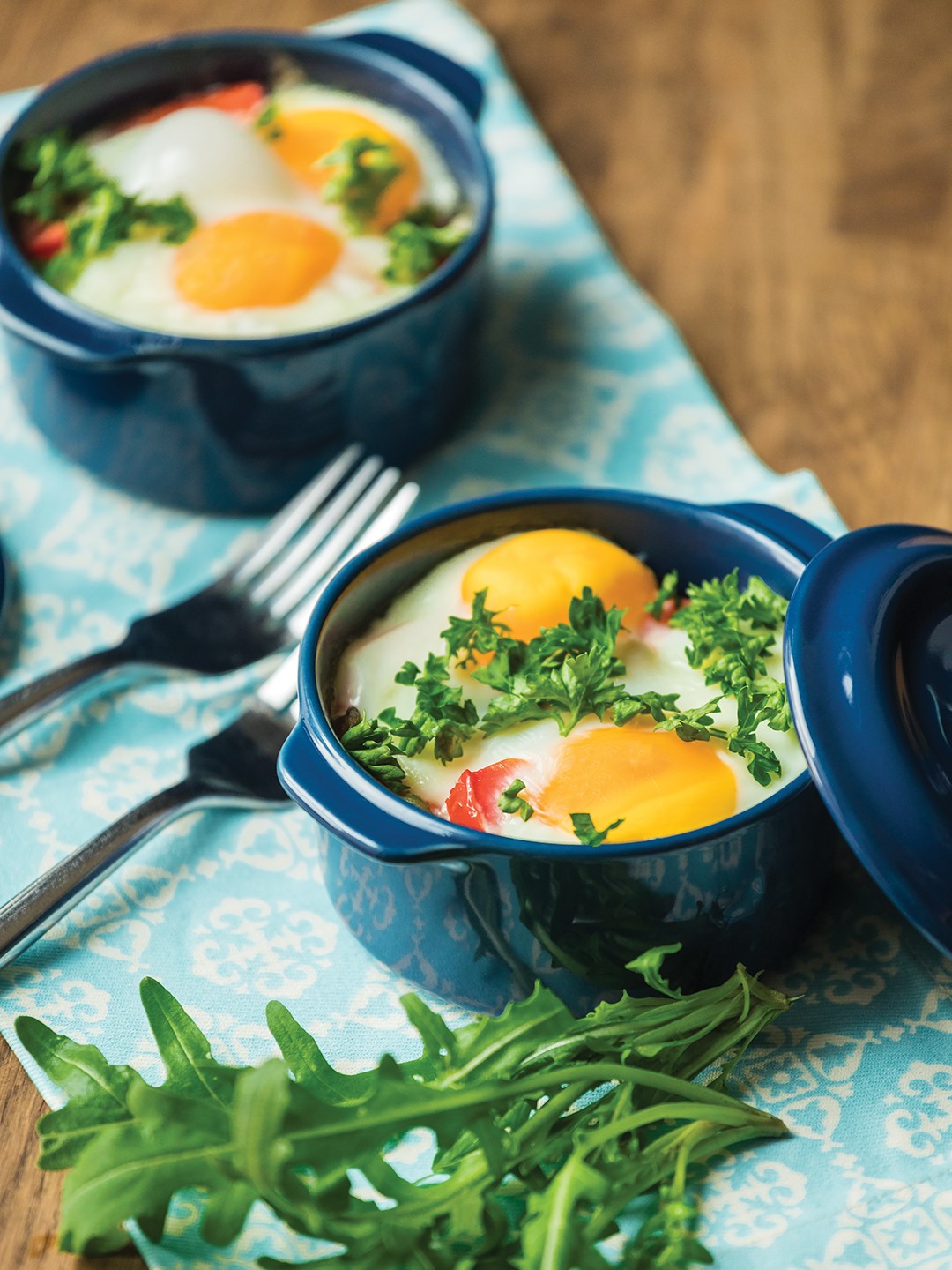
“Baked eggs are fantastic for special occasions where you want to provide options for a variety of palates,” Michele Phillips says. “Individual ramekins can easily include different ingredients and be cooked for different lengths of time to accommodate various preferences.” iStock/seregalsv
Foodie Michele Phillips offers a fresh look at classic egg dishes.
With Easter arriving on April 5, the month brings a bit more attention to eggs. After all, there are hunts to be organized and brunches to prepare! But there can be more to eggs than hard boiling, dying and hiding them around the house or yard or whipping them up into an egg bake. (Yawn.) Enter: Eggs en Cocotte and Shirred Eggs, both of which serve as fresh takes on a classic food to elevate your at-home menu for holidays and any time of year.
Minnetonka’s Michele Phillips, writer, photographer and one of our Editorial Advisory Board members, shares what we need to know about the egg dishes and offers a few ideas for complementing side dishes. (Don’t tip your hand, but this might be an ideal time to practice these techniques before Mother’s and Father’s days arrive, and you’ll be ready for an at-home breakfast or brunch that is high on taste and presentation.)
What defines Eggs en Cocotte vs. Shirred Eggs?
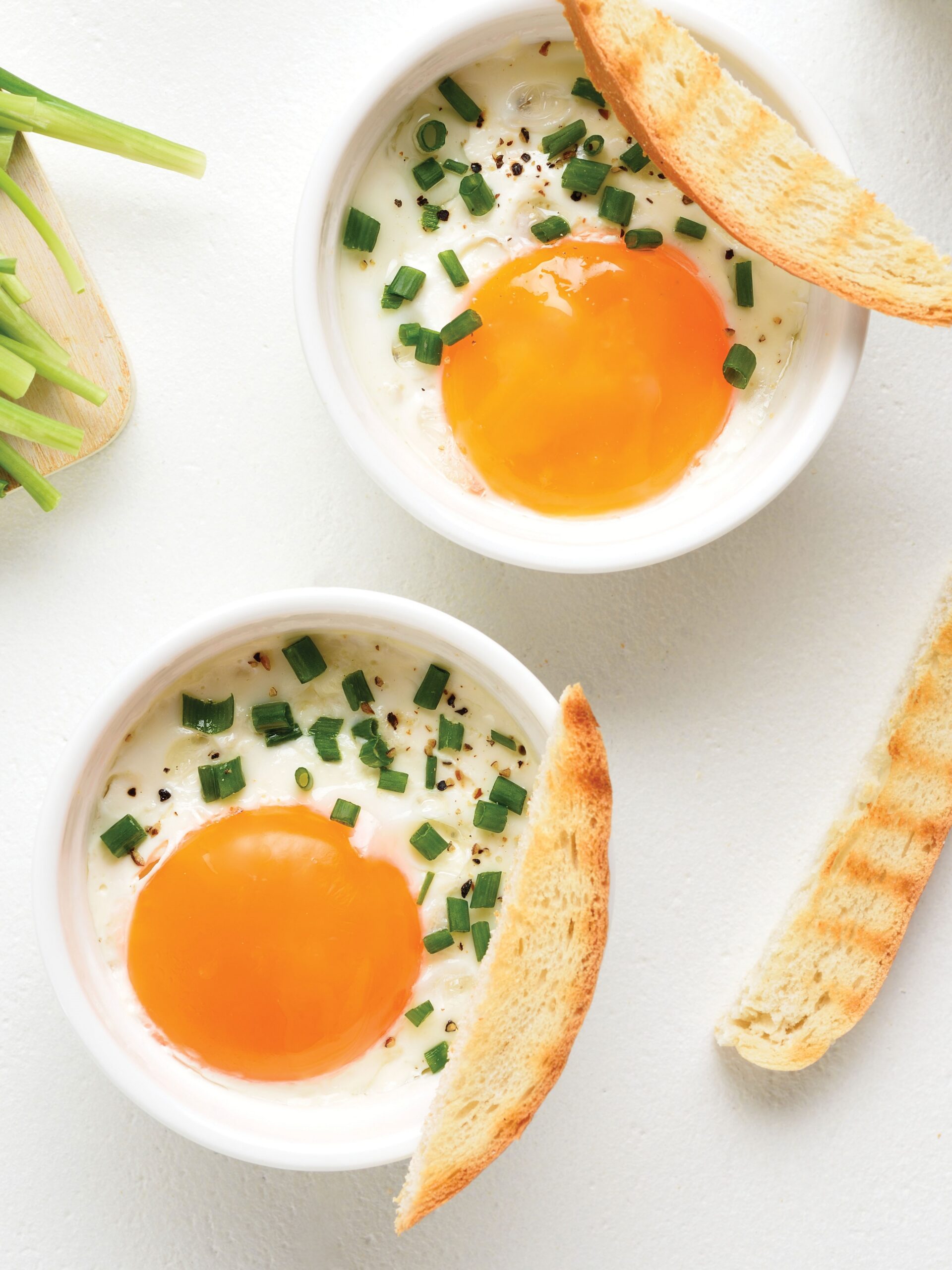
“Eggs en Cocotte and Shirred Eggs (often referred to as Baked Eggs) are essentially the same. The difference is how the eggs are cooked,” Phillips says. “Both dishes feature eggs baked in individual ramekins. Small amounts of butter and cream are added to the eggs, along with seasonings, herbs and cheeses. The eggs are then baked just until the whites are lightly set and yolks are soft and creamy. The result: delicate, custardy eggs perfect for dipping toast and enjoying as is or with sauces, toppings and add ins.”
Here’s where the difference comes in.
“Eggs en Cocotte (French for eggs in a pot …) are traditionally baked in a water bath (bain-marie),” Phillips says. “The filled ramekins are placed in a larger pan, and then hot water is added to the pan before baking. The steam created by the water bath produces gentler, more even cooking. This method is often preferred for softer whites and creamier yolks.”
“Shirred Eggs are baked without a water bath, thus saving a step. It’s easier to achieve a firmer egg texture with this method if you prefer,” she says. “Overcooking the eggs can happen more easily with dry heat, so it’s especially important to keep an eye on the eggs while cooking.”
A recipe’s difficulty level can be top of mind for home cooks.
“Shirred Eggs are technically easier by omitting the water bath,” Phillips says. “That said, both methods are easy to make successfully with a little practice. Personal preferences are key. Everyone likes something different, and once a dish like this becomes a favorite, you can vary it endlessly.”
iStock/TatianaVolgutova
Eggs en Cocotte and Shirred Eggs
(Serves one; repeat for as many servings as needed.)
Courtesy of Michele Phillips
- salted butter (for the ramekins)
- 1–2 Tbsp. heavy cream, room temperature
- 1–2 large eggs, room temperature
- kosher salt and ground black or white pepper, to taste
- 1 Tbsp. fresh grated Parmesan or other cheese of choice (optional)
- 1 tsp. fresh chives or other herbs, finely chopped
Preheat the oven to 350 F with the rack centered. Coat the inside of the ramekin with butter. Add cream to coat the bottom of the ramekin.
Crack the egg(s) into the ramekin. Season with salt and pepper, and sprinkle cheese (if using) over the top. For Eggs en Cocotte: Place egg ramekin in a tall-sided, oven-safe pan. Add hot water to the pan to half the height of the ramekin, and bake (uncovered). For Shirred Eggs: Place egg ramekin on a rimmed sheet pan, and bake (uncovered). Bake for 10 minutes, and check doneness. The egg whites should be opaque, and the edges should be set. The centers should still be slightly jiggly. (Note: Eggs continue to “carry over cook” after being removed from heat, so the centers will continue to firm up after baking.) Remove the ramekin from the oven, and allow it to rest for 2–3 minutes. Top the baked eggs with fresh herbs and more cheese if you like, and serve with buttered toast or warm crusty bread.
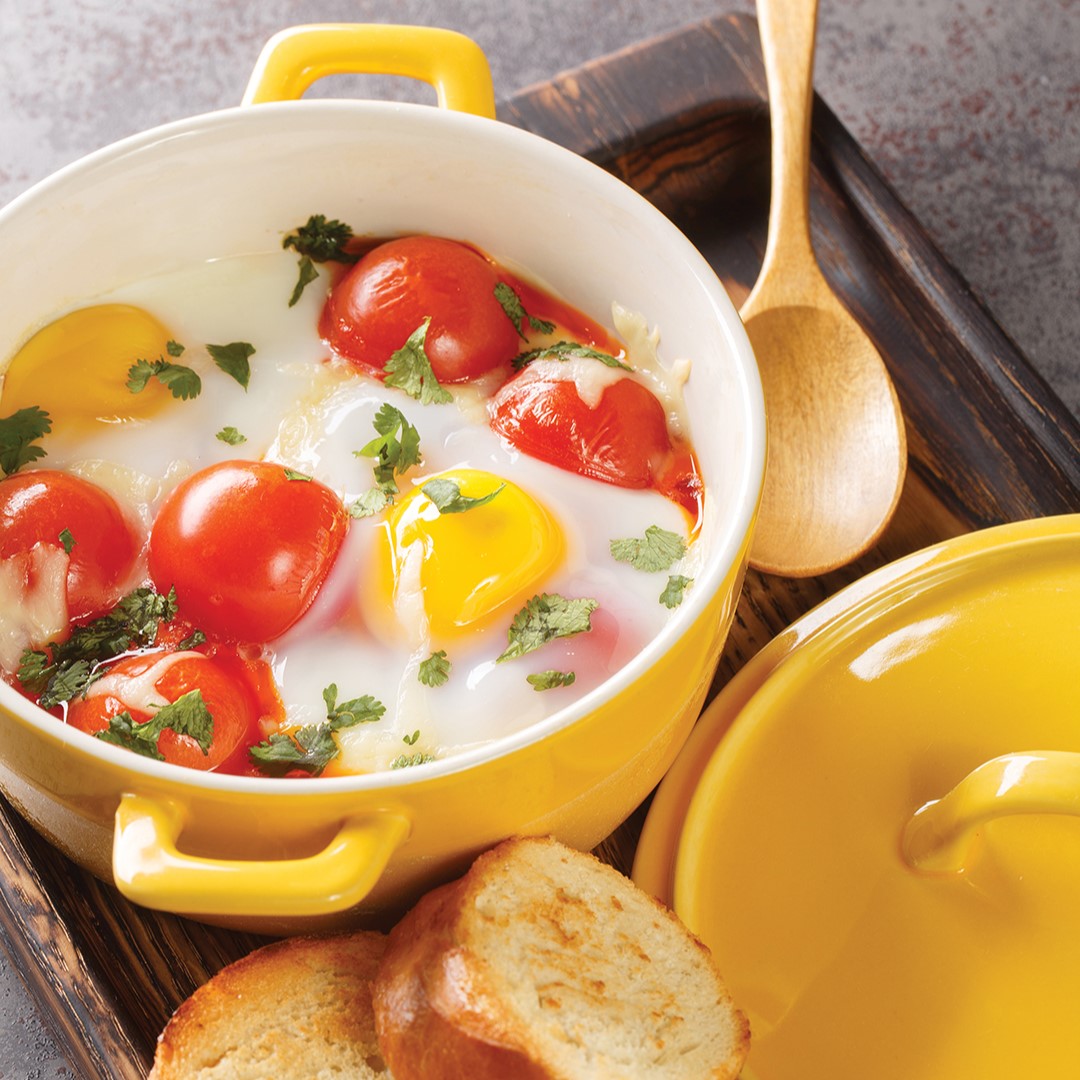
“Baked eggs are the perfect place for fresh herbs because the flavors of the herbs bloom when sprinkled over the hot eggs,” Michele Phillips says. ”Herbs are more than just a garnish.” She recommends using 1–2 Tbsp. of room-temperature topping per egg, suggesting Boursin, feta or goat cheese; or finely chopped or sliced vegetables, roasted or sauteed. iStock/ALLEKO
Additional Recipe Notes:
General cooking guidelines, using 350 F for both Eggs en Cocotte and Shirred Eggs are as follows. (Adjust these guidelines as needed.)
- Runny Yolks: 10–15 minutes
- Soft Yolks: 15–19 minutes
- Firmer Yolks: 20–25 minutes
In addition to personal preferences, factors to consider when determining cooking times include:
- oven intensities (Every oven is different.)
- size and thickness of the ramekins
- number of eggs used
- amount of ingredients (cheeses, meats, veggies, etc.) added to the eggs
On the Side
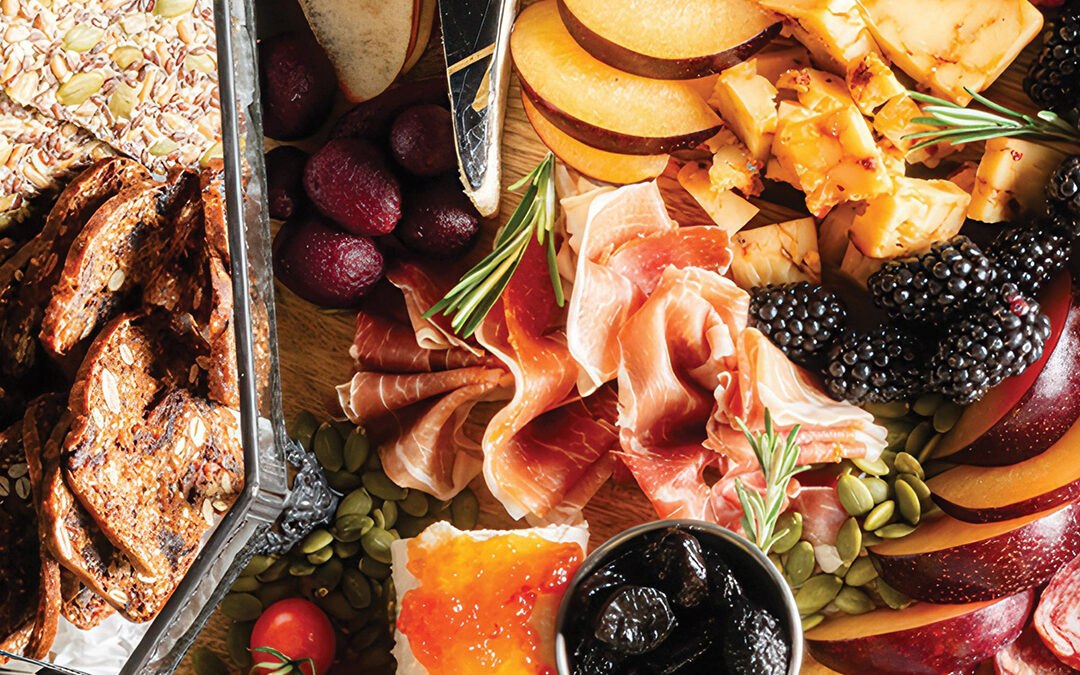
To accompany the egg dishes, Michele Phillips says, “Baked eggs are typically served with buttered, pan-toasted bread or warm, crusty bread, torn into chunks for dipping into the eggs. Fresh greens, lightly dressed with good olive oil and balsamic or champagne vinegar, complement rich baked eggs perfectly.”
Other ideas:
- asparagus, roasted or steamed
- capers
- caramelized onions
- cured meats
- French toast, pancakes or waffles
- fruit, lightly dressed or as a fruit salad
- garlic confit
- mushrooms, spinach or other greens, sauteed
- pickled vegetables
- potatoes, roasted, or crispy hash browns
- smoked fish or meats
- tomato jam
- tomatoes
Michele Phillips
Instagram: @baconfatte