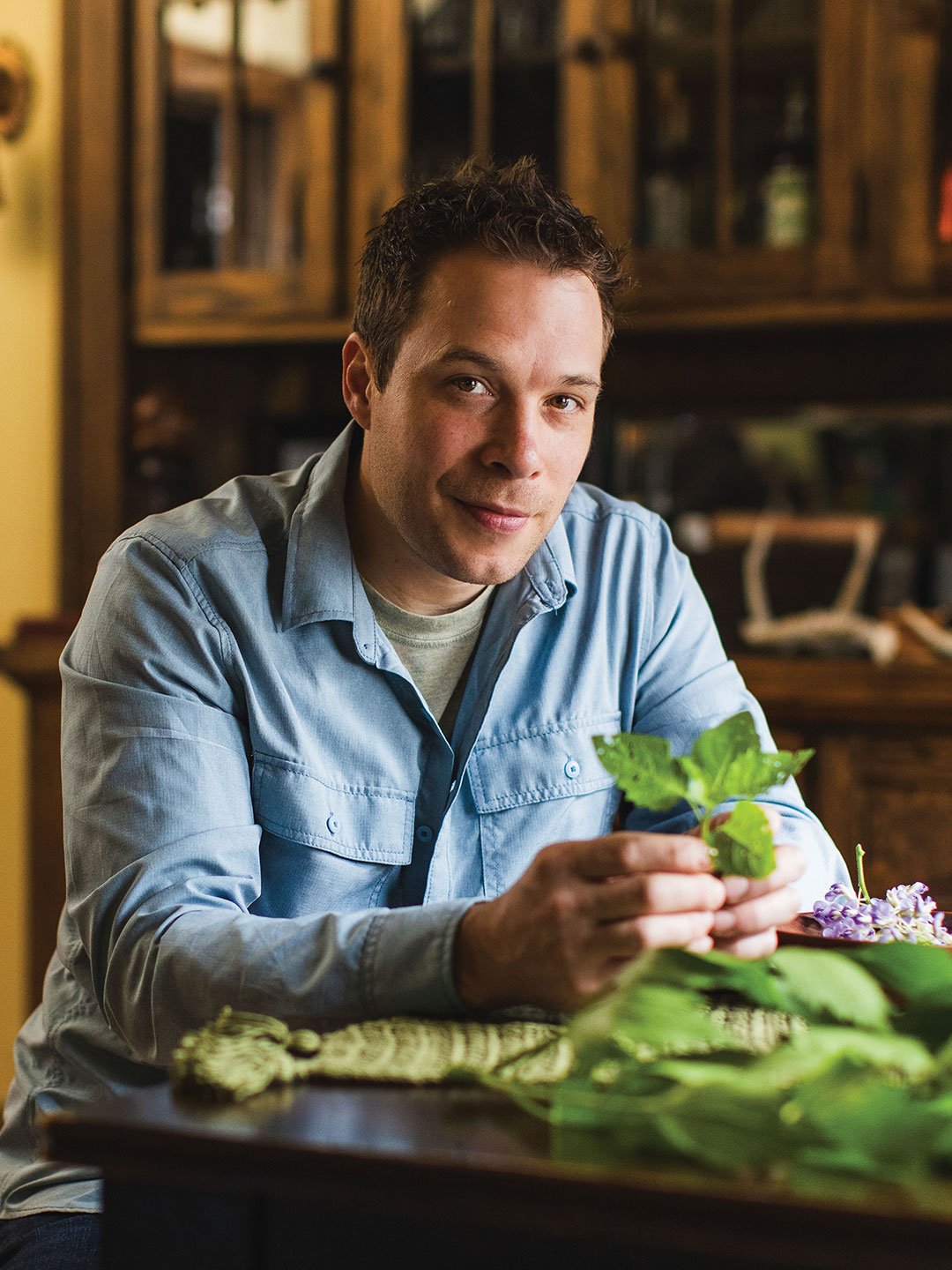
Alan Bergo, with his harvest of edible native plants that he grows at home, appreciates earthly bounties. Photos: Chris Emeott
The Forager Chef educates on how to discover a wild harvest in your neck of the woods.
If you’ve ever been on a woodland hike and noticed a cluster of interesting shapes or colors at the base of a tree—and maybe gotten down for a closer look—you already know the thrill of discovery that comes with spotting wild mushrooms. “Foraging teaches you about where you live,” says former local Alan Bergo, a Twin Cities chef and foraging expert. “It gets you outside, and it forces you to learn and become an amateur mycologist.”
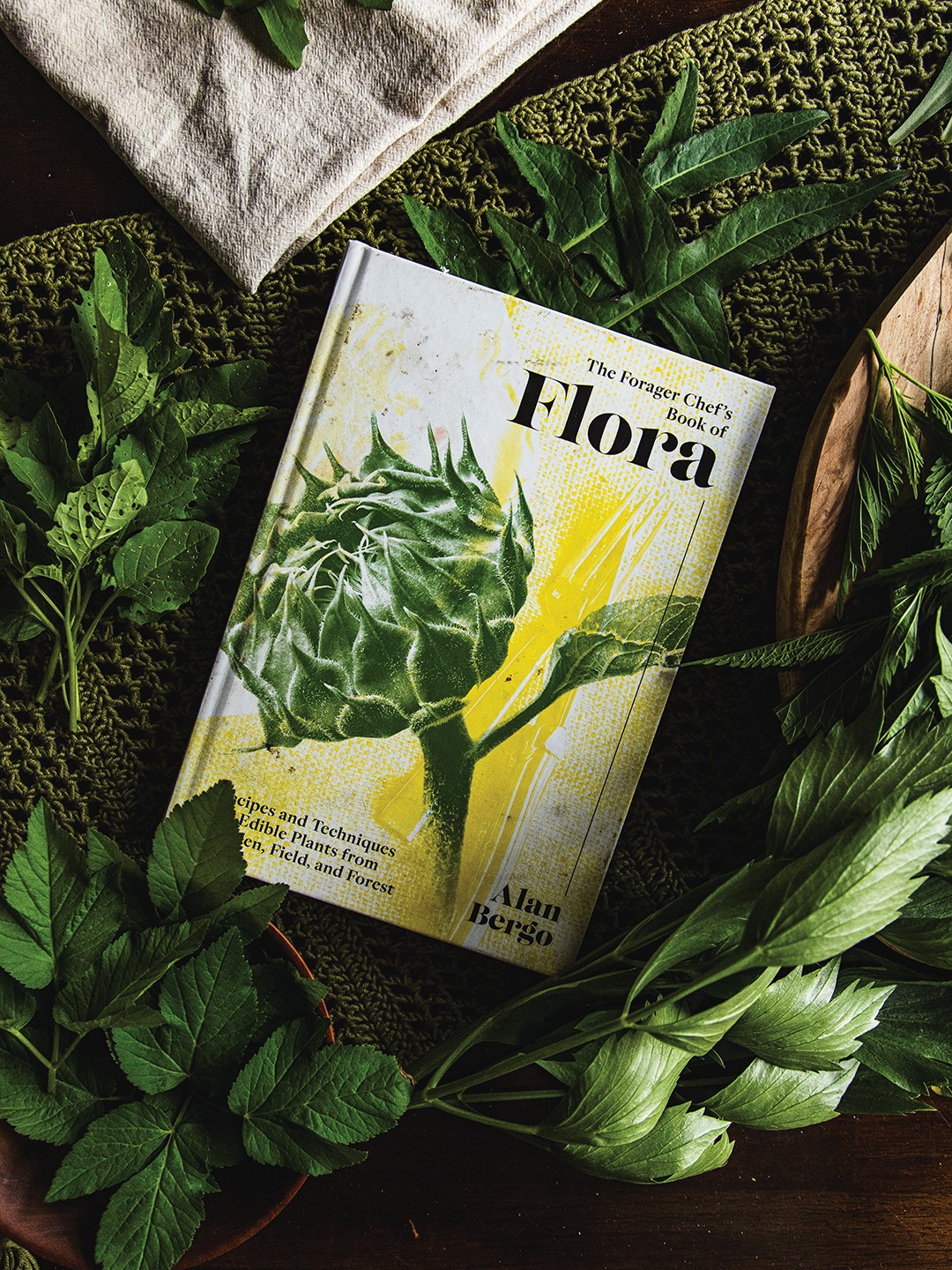
Bergo’s website, foragerchef.com, is a trove of information on mushrooms, wild plants and how to get started foraging; he also wrote The Forager Chef’s Book of Flora and is a vocal advocate for foraging in Minnesota and the region. “The interest in foraging for mushrooms is exploding,” Bergo says. “There’s an entire world growing under the surface, literally.”
So how to begin? Start close to home. In Minnesota, you can find at least a few mushroom varieties on most wooded land. Novice foragers should seek out credible websites or books—or take a class—to practice identifying what they find. Although there’s some risk involved, Bergo says, we tend to underestimate our instincts. “Every single person on this planet is descended from a forager,” he says. “Are there poisonous mushrooms? Absolutely. But can you get E. coli from eating fast food? Absolutely.”
After you’re comfortable with your initial research (maybe identifying two or three common types of mushrooms), head into the woods. Foraging on private land where you have permission is ideal, but some public parks allow visitors to pick mushrooms in limited quantities or without leaving main trails. “It’s tricky because foraging regulations are under-standardized,” Bergo says. (Be sure to carefully check the rules or ordinances before you venture out.)
Alan Bergo
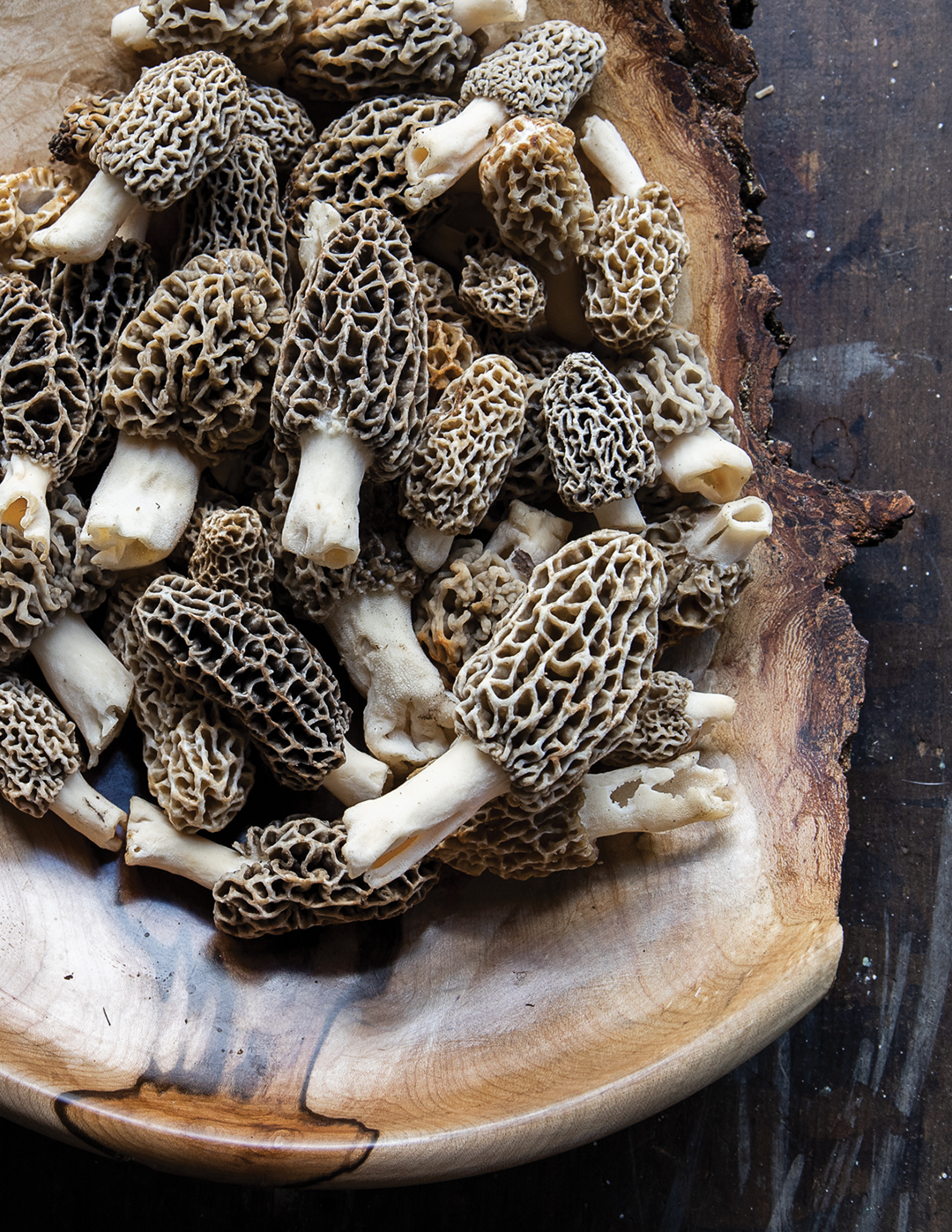
Mushroom season typically begins in spring with early varieties—like morels—popping up by mid-May. “I’ve never seen a year where we couldn’t pick morels on Mother’s Day,” Bergo says. “Then June is a quieter time before we get the summer rains.” By July and August, the season is again in full swing. “You should be able to pick 10 or 15 different types of mushrooms in a single place until the snow falls,” Bergo says. There’s no “right” place to look for mushrooms: Watch for fallen logs and dead trees, where decomposition feeds the mycelium, the fungal network under the soil.
Once you’ve got your foraged haul back to your kitchen, properly clean and store your mushrooms. “Mushrooms are more closely related to meat than they are to plants,” Bergo says. “They must go in the fridge.” Gently swish your mushrooms in water to rinse off dirt and debris, and store them in a large plastic bag. “Think of it like a terrarium,” Bergo says, intended to keep the mushrooms in a humid environment. Generally, you should pick mushrooms when they’re ready to eat and consume them within a few days.
Bergo’s best advice is to seek out credible information from experienced educators. His favorites include Alexis Nicole Nelson (@theblackforager on Instagram); in-person forays with the Minnesota Mycological Society (minnesotamycologicalsociety.org); local classes with Four Seasons Foraging (fourseasonforaging.com); and Samual Thayer (foragersharvest.com).
Visit foragerchef.com for Alan Bergo’s detailed expertise on local mushrooms and how to start foraging. The Forager Chef’s Book of Flora can be found on his website or on amazon.com.
Facebook: ForagerChef
Instagram: @foragerchef