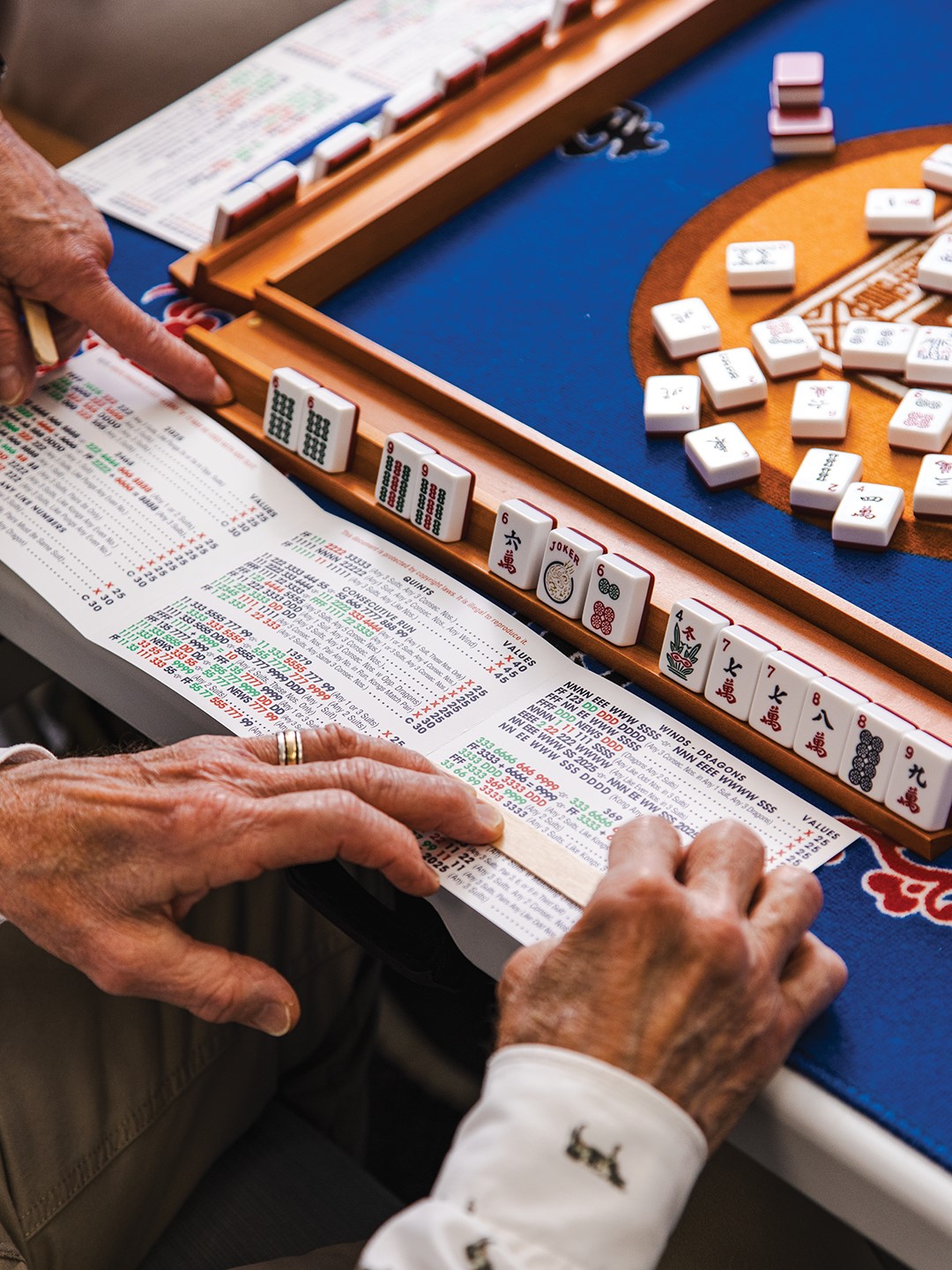
There is a real sense of community while playing Mah Jongg, including at the beginning of a game as players flip tiles and through plenty of table talk. Photos: Chris Emeott
A Minnetonka Community Education Mah Jongg instructor brings players together over a shared love of the game.
A few years ago, actor Julia Roberts was a guest on The Late Show With Stephen Colbert, and she mentioned her love of Mah Jongg. “The concept of it is to create order out of chaos based on the random drawing of tiles,” Roberts explained to Colbert. “It’s like life—we try to make a little bit of order out of the chaos of life, just with our random acts of wisdom and kindness.”
Roberts’s words about the game resonated deeply with Melinda Colwell, a Deephaven resident who’s been teaching Mah Jongg at the Minnetonka Community Education Center and other local gathering places for five years. “It’s a social game,” Colwell says. “I’m a huge believer in community and gathering people … I hear more and more that people are coming [to Mah Jongg class] because they want to meet people and fight against this loneliness epidemic that we have.”

Melinda Colwell, coaching players, says the face of the Mah Jongg is changing as younger players, including her 9-year-old grandson, are picking up the tiles and learning the game.
Colwell began learning Mah Jongg many years ago when she worked at The Marsh in Minnetonka and overheard the sound of tiles being moved and stacked—the “clattering sparrows” sound. (In many Chinese dialects, Mah Jongg loosely translates to clattering sparrows.) “I walked over to figure out what the noise was and saw people playing this game,” Colwell says. She gathered a few friends to learn Mah Jongg with her, and they mostly taught themselves, using a few books. “I started teaching friends and then friends of friends, and it just kept going,” she says. In mid-2020, a recreation director at the Chanhassen Recreation Center asked Colwell if she’d teach a Mah Jongg class there—and the rest is history.
Today, Colwell teaches Mah Jongg classes, most lasting five or six weeks, via city recreation or community education departments for Chanhassen, Cottage Grove, Eden Prairie, Minnetonka and White Bear Lake. “It has a bit of a perception as an old ladies’ game, but that’s just not true,” she says. Her students range in age from their 20s to their 80s, and her 9-year-old grandson is learning. “The demographic has really changed and become a lot younger,” Colwell says. “That’s been fun.” She provides the tile sets for each class and has honed a teaching style that’s enjoyable and effective for her students of all ages.
Minnetonka Community Education offers Mah Jongg for beginners ($85 with sets provided) and open play sessions ($5 per set; players encouraged to bring their own sets). Register and find details at minnetonka.ce.eleyo.com.
“It did take five weeks to learn,” says Teja Grandstrand, who took Colwell’s Minnetonka Community Education class almost a year ago. “But Melinda is such a patient, funny and meticulous instructor that she makes it very easy and enjoyable to learn the game.”
Colwell assures that, although it sounds complex, learning how to play Mah Jongg is “doable” and requires a pleasant mix of patience, strategy and luck. “It’s sociable,” she says. “People can play for hours; they eat and talk and laugh.” Her students find that Mah Jongg offers the right amount of challenge, allowing them “to focus on something completely unrelated to everyday concerns,” she says. Colwell provides nametags, so her students can easily get to know each other, and many forge friendships that last long after the class finishes.
Grandstrand has appreciated the social aspect of her continued Mah Jongg playing. “In general, my hobbies are more solitary … so it has been fun to gather with other people [who] are excited to learn and play Mah Jongg,” Grandstrand says. “We laugh, and we celebrate each other’s wins, and we always make sure we have another date on the calendar to play again.”
Through History
Mah Jongg originated centuries ago in China with lots of variation in rules by region and era. In the early 20th century, an American businessman, stationed in Shanghai, noticed the game’s popularity and started sending Mah Jongg tile sets back to the United States. In 1937, the National Mah Jongg League standardized a set of rules for the American version as it took off all over the country.
Nitty Gritty
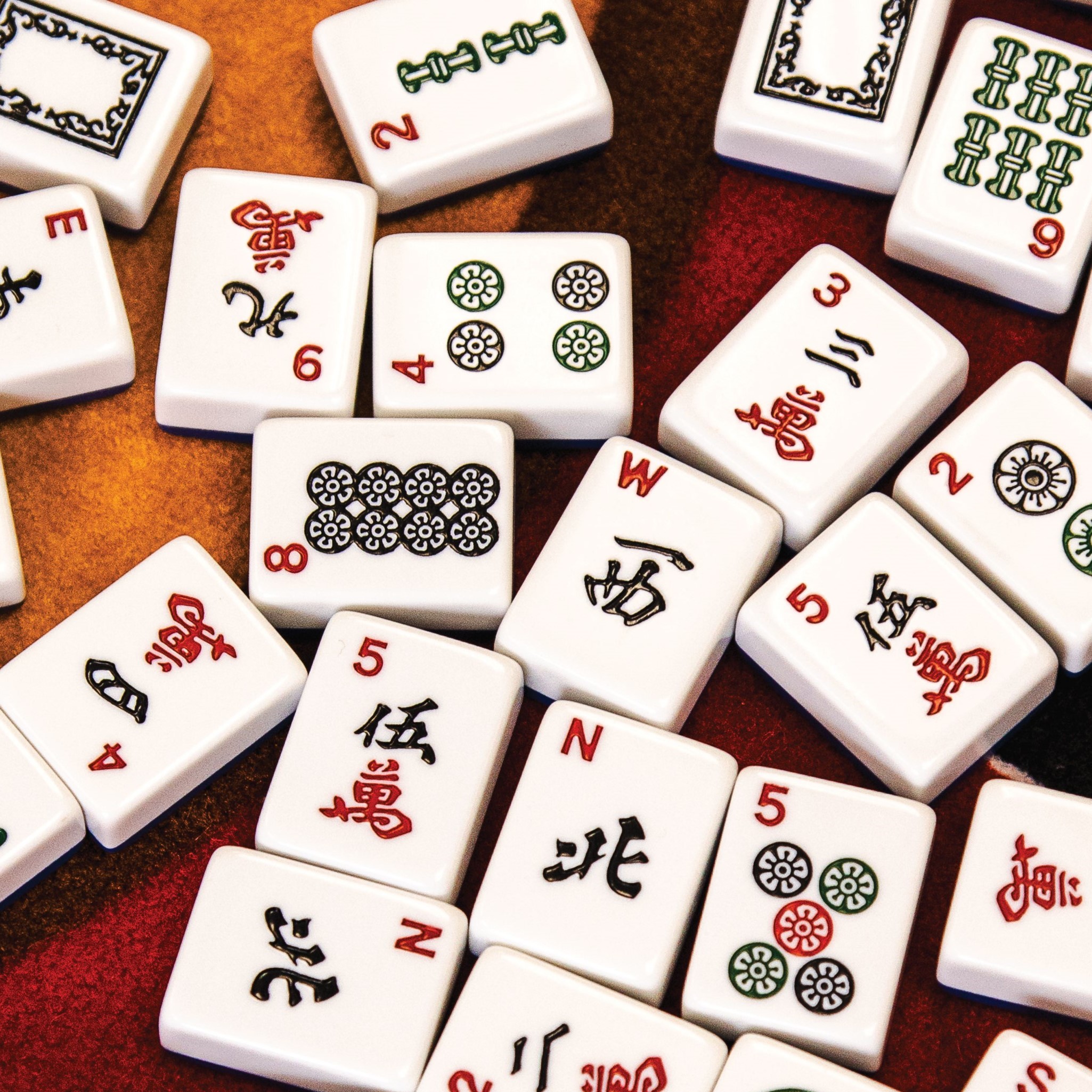
One Mah Jongg set includes 152 tiles and serves a table of four players, who use racks to hold their tiles and the annual score card published by the National Mah Jongg League (NMJL). The goal of the game is to be the first player to match tiles to a specific hand on the score card by choosing, discarding and passing tiles among the players at the table.
Because the scoring changes each year based on the NMJL card, the game feels fresh even to longtime players. “I play Mah Jongg at least once a week. I love the intellectual challenge of the game,” says Smitha Abbott, who took a class with Melinda Colwell through Minnetonka Community Education. “It’s completely different; the game changes every year.”

Minnetonka Community Education
4584 Vine Hill Road, Excelsior; 952.401.6800
Facebook: Minnetonka Community Ed